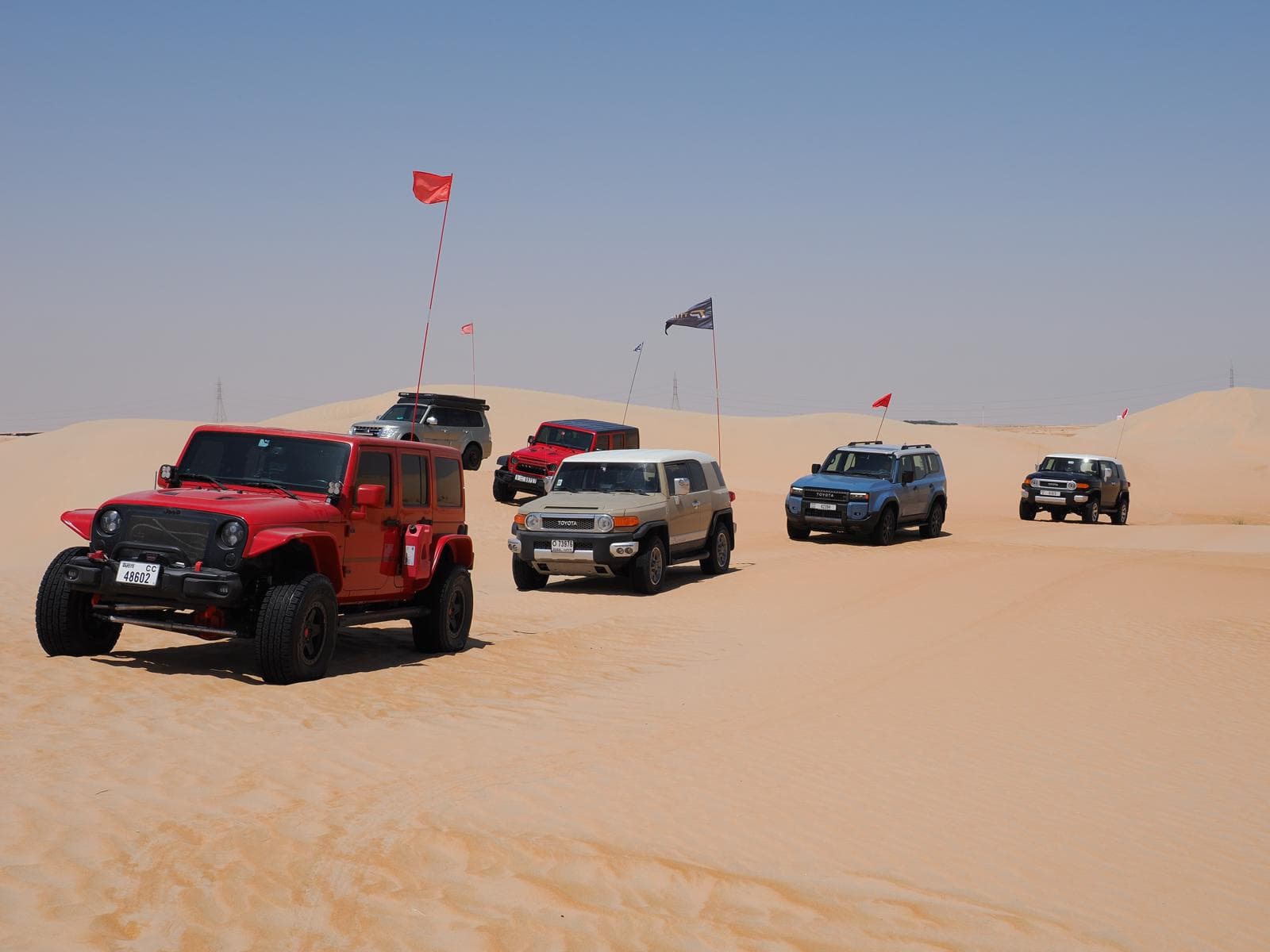
Key Takeaways & Field SummaryOfficial Marshal Notes
Here are 12 essential things first-time off-roaders should know
Before You Take Your 4x4 into the UAE Desert: 12 Things Every Beginner Should Know
The UAE is a fantastic place to explore the outdoors, and owning a powerful 4x4 SUV is a great starting point. But there's one important distinction every new driver should understand: a vehicle built for off-roading does not automatically make its driver ready for the desert.
Driving on sand is a skill. It requires an understanding of your vehicle, the terrain, tyre pressure, momentum, recovery procedures and, above all, good judgement.
Before heading into the dunes around Dubai or anywhere else in the UAE, here are 12 essential things first-time off-roaders should know.
1. Learn your vehicle before testing its limits
Not all SUVs are equally capable, even if they look similar. Before your first drive, learn:
- Whether your vehicle has genuine four-wheel drive or is primarily a two-wheel-drive SUV.
- How to select the appropriate sand or off-road driving mode.
- How high-range and low-range gearing work, if fitted.
- Whether your vehicle has a locking differential or electronic traction control.
- Where the recovery points are and whether they are approved for vehicle recovery.
- How to disable or adjust traction and stability control when appropriate for your vehicle.
Read the owner's manual, particularly the manufacturer's instructions for sand driving and recovery. A sophisticated SUV can help you, but it cannot compensate for poor judgement.
2. Deflate your tyres before entering soft sand
dubaioffroad.ae
Tyre pressure is one of the most important factors in desert driving. Lower pressure increases the tyre's footprint, helping the vehicle float over soft sand rather than dig into it.
As a general starting reference for many 4x4s on UAE sand:
- 14–18 PSI: a commonly used range for recreational sand driving.
- Adjust as necessary: vehicle weight, tyre construction, terrain and driving conditions all affect the appropriate pressure.
- Reinflate before returning to paved roads: use a reliable compressor and follow the vehicle and tyre manufacturer's limits.
These figures are a guide, not a universal prescription. Do not simply copy another driver's pressure without considering your vehicle and load.
Carry a tyre-pressure gauge, a suitable deflator and an onboard compressor. Never assume your tyres are at the correct pressure just because someone else has checked theirs.
3. Understand momentum — but never confuse it with speed
Sand driving is about maintaining controlled momentum. Too little momentum on a soft incline can leave you stuck; too much speed can cause a rollover, a hard impact or a loss of control.
Learn to:
- Maintain steady throttle rather than repeatedly accelerating and braking.
- Read the sand ahead and choose a suitable line.
- Avoid stopping halfway up a dune wherever safely avoidable.
- Never accelerate blindly over a dune crest.
- Keep enough distance from other vehicles to react safely.
The objective is controlled progress, not speed or spectacular dune climbs.
4. Learn to read the desert terrain
The desert is not one uniform surface. Firm sand, soft bowls, steep slip faces, ridges and uneven ground behave differently.
Beginners should learn to recognise:
- Dune crests: you may not see what lies beyond them.
- Slip faces: steep, often loose slopes that can be hazardous to climb or descend.
- Soft bowls: areas where a vehicle may lose momentum and become bogged down.
- Hidden drops and cross-slopes: potential rollover hazards.
- Vegetation, wildlife and disturbed sand: signs that call for extra caution and a change of line where appropriate.
If you cannot see where your intended path leads, do not commit to it. Stop at a safe distance and ask an experienced marshal to assess the route.
5. Never go alone on your first desert drive
Your first outing should be with a reputable off-road club or qualified instructor who understands beginner training and vehicle recovery.
A well-organised convoy should have:
- An experienced lead marshal who selects the route and sets the pace.
- A rear marshal, often called the sweep, who ensures nobody is left behind.
- A briefing covering radio communication, convoy spacing and emergency procedures.
- A clear plan for breakdowns, recoveries and changes in weather or visibility.
Follow the vehicle ahead, but never blindly copy its manoeuvres. If you lose sight of the vehicle behind you, communicate with the convoy and stop somewhere safe as instructed.
Ventrax Offroad+1
6. Know what to do when you get stuck
Getting stuck is a normal part of learning. What matters is how you respond.
- Stop spinning the wheels. Excessive wheelspin digs the vehicle deeper into the sand.
- Stay calm and assess the situation.
- Follow your marshal's instructions before attempting to move again.
- If appropriate and safe, clear sand from around the tyres and underneath the vehicle.
- Use traction boards or a recovery procedure only when you understand how to do so safely.
Never attach a recovery strap to a tow ball or an unapproved point. Recovery equipment under tension can cause serious injury if it fails. Keep everyone clear of the recovery line and follow the trained recovery operator's instructions.
Jetour UAE+1
Remember: getting stuck is usually a learning opportunity. Turning a minor bogging into an expensive recovery or damaged vehicle is often the result of panic and continued acceleration.
7. Carry the right equipment
Your vehicle should be prepared for the possibility that a short drive becomes a long day.
Tyre equipment
Pressure gauge, tyre deflator, reliable compressor, serviceable spare tyre and the tools needed to change it.
Recovery equipment
A shovel, traction boards and suitable rated recovery gear compatible with your vehicle. Learn how to use them before relying on them.
Emergency supplies
Drinking water, first-aid kit, secured fire extinguisher, torch, charged phone, power bank and suitable clothing.
Communication and navigation
A working radio compatible with the convoy's agreed channel, navigation with offline maps and a clear understanding of the route.
Check that the equipment is suitable for your vehicle and that you know how to use it. Having recovery equipment in the boot is not the same as knowing how to conduct a safe recovery.
Jetour UAE+1
8. Check your vehicle's condition before leaving home
Sand places different demands on a vehicle from normal road driving. A mechanical issue that seems minor on the highway can become a major problem in the desert.
Before departure, check:
- Tyres, including the spare, for damage and excessive wear.
- Engine oil, coolant and other fluids according to the owner's manual.
- Battery condition and charging system.
- Cooling system, hoses and belts where applicable.
- Brakes, suspension and warning lights.
- Fuel level, recovery points and the security of any equipment or luggage.
Start with a full tank and leave yourself enough fuel for unexpected delays. If the vehicle has overheating symptoms, a warning light or a mechanical fault, postpone the drive rather than hoping it will be fine.
Jetour UAE+1
9. Learn the rules of convoy driving
Desert driving is a group activity. Your decisions can affect the safety of everyone around you.
- Maintain sufficient distance to react without being blinded by sand from the vehicle ahead.
- Do not overtake or change convoy position without permission.
- Do not stop on a dune crest or in the path of approaching vehicles.
- Listen to radio instructions and keep communications brief and clear.
- Never leave the convoy without informing the lead marshal.
- If you experience a problem, report it early rather than struggling silently.
A marshal's job is to help you develop your driving skills while managing risk. Cooperate with the team and be honest about your experience.
10. Respect the desert, its wildlife and other people
The desert is a natural environment, not an amusement park.
Stay clear of wildlife, avoid damaging vegetation, do not litter, and keep noise and unnecessary lighting to a minimum. Respect protected areas, restricted zones, campsites and other desert users.
Weather also matters. Dust can sharply reduce visibility, while rainfall can make wadis dangerous because of flash flooding. Check official forecasts and warnings, and postpone or abandon the outing when conditions are unsuitable.
Ventrax Offroad+2
11. Start with an easy route and progress gradually
Your first drive is not the time to attempt steep dunes, technical crossings or remote routes.
Choose a beginner-friendly session where the instructor can demonstrate the basics, observe your technique and give you feedback. Build your experience in stages:
Stage 1 — Learn the fundamentals
Vehicle controls, tyre pressure, sand behaviour, basic steering, throttle control and safety procedures.
Stage 2 — Practise with a marshal
Develop consistent control on gentle terrain, learn to read the sand and practise responding to instructions.
Stage 3 — Progress at your own pace
Advance to more challenging terrain only when your instructor considers your skills and judgement ready.
You do not need expensive modifications to begin learning. A suitable, well-maintained vehicle, the right equipment and proper instruction are much more important than cosmetic upgrades or engine power.
Dubai Offroad+1
12. Know when to stop
This may be the most important lesson of all.
If you are tired, uncomfortable with a manoeuvre, running short of daylight, experiencing a mechanical problem or uncertain about the terrain, tell your marshal. Do not allow peer pressure, pride or the desire to keep up with more experienced drivers to influence your decisions.
The ability to recognise your limits is a sign of a good off-roader, not a weakness.
Your first-drive checklist
Ready for the desert?
0 of 8
[ ] Read the vehicle manual and confirm genuine off-road capability
[ ] Inspect tyres, spare wheel, fluids and mechanical condition
[ ] Carry a gauge, deflator and working air compressor
[ ] Carry water, first aid, emergency supplies and a charged phone
[ ] Bring the required radio and understand the convoy procedure
[ ] Join a supervised beginner drive with experienced marshals
[ ] Attend the full safety briefing and follow the agreed route
[ ] Reinflate tyres appropriately before normal road driving
Copy checklist
The final word
A powerful 4x4 gives you the potential to explore the UAE's magnificent desert, but the real difference between a capable off-roader and a safe one is training, judgement and experience.
Learn the fundamentals before testing your vehicle. Drive within your ability, respect your fellow drivers and the environment, and always put safety ahead of adventure.
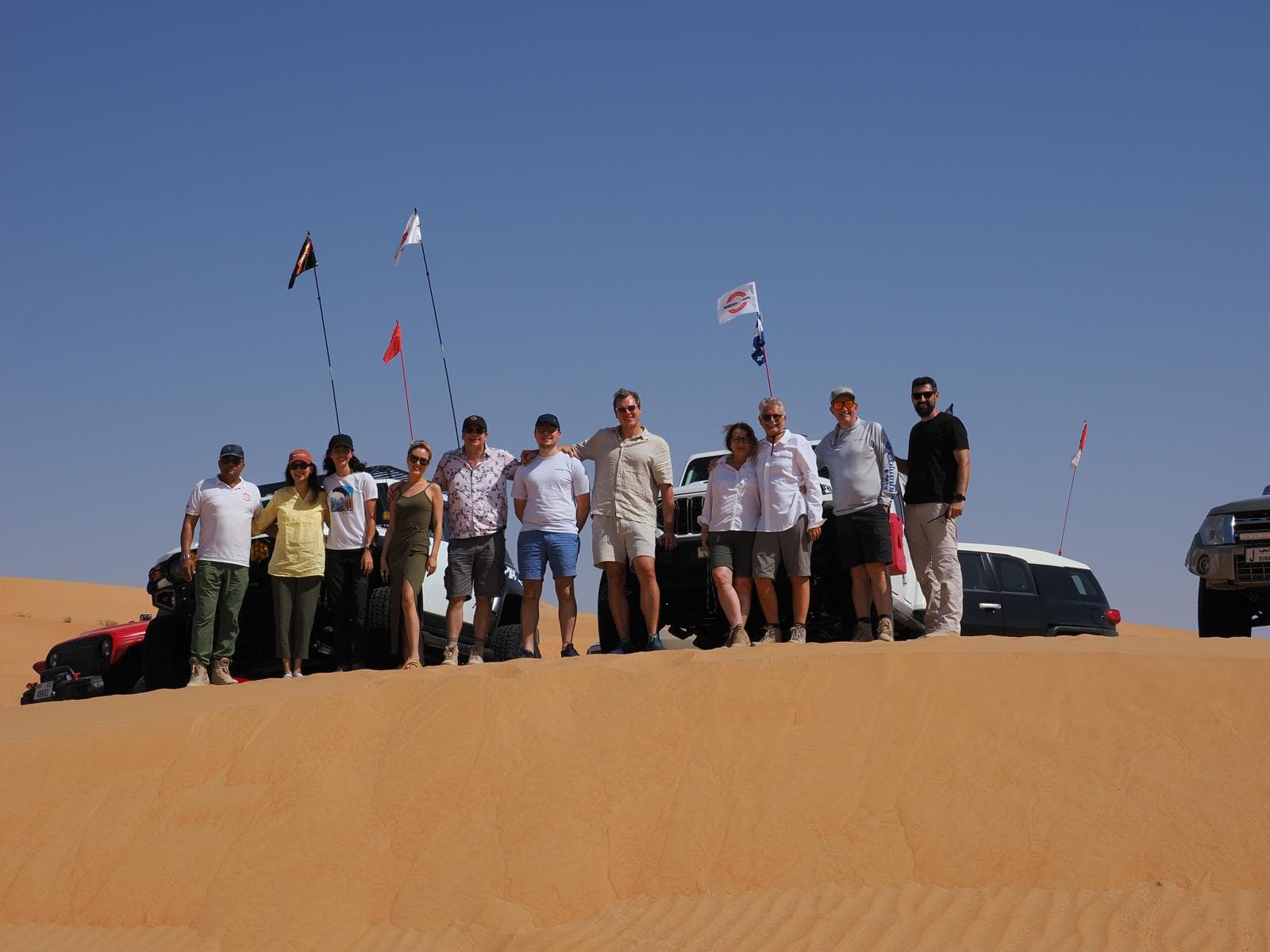
At Dubai Offroaders, our guiding principle is simple: the objective is not merely to drive in the desert, but to learn to do so safely, responsibly and confidently — and to make sure nobody is left behind, ever.
Official Dubai Offroaders Safety Principle
Remember: Lower tyre pressures to 15–18 PSI before touching sand to expand your longitudinal footprint. Never attach a snatch strap to a tow ball or bumper, and always keep both thumbs on the outside of the steering wheel rim.
#Desert driving in UAE Beginner off-road driving in Dubai 4x4 desert driving tips Off-road driving training in Dubai UAE desert driving safety How to drive a 4x4 on sand
Community Discussion0
Open public discussion. Share your thoughts, ask questions, or connect with certified marshals and fellow drivers.
DO Community Etiquette: Be supportive, share accurate desert knowledge, and uphold safety first.
Posting publicly as a guest visitor. Sign in if you have a Dubai Offroaders account.
Human VerificationBot Protection
Loading security check…


No comments yet — be the first to break the desert silence!