
Key Takeaways & Field SummaryOfficial Marshal Notes
Discover essential desert off-road driving dos and don’ts, including vehicle preparation, tyre pressure, dune safety, convoy discipline, recovery techniques, and wildlife and environmental protection with Dubai Offroaders.
Desert Off-Road Driving: Dos and Don’ts
Dubai Offroaders — Safe, Responsible and Enjoyable Desert Driving
Desert off-roading is an exciting adventure, but it requires preparation, sound judgement, responsible driving and respect for the desert environment. Whether you are a beginner or an experienced driver, safety must always come first.
8
1. Before you enter the desert
DO
Ensure your vehicle is suitable for off-road driving and that its 4WD system is working correctly.
Check tyres, brakes, fluids, battery, recovery points and fuel.
Carry sufficient drinking water, a first-aid kit, a tyre-pressure gauge, a compressor and appropriate recovery equipment.
Carry a charged mobile phone, a suitable communication device and offline navigation or the designated tracking application.
Inform someone of your route and expected return time when travelling independently.
Join a group led by experienced marshals if you are new to desert driving.
DON’T
Enter the desert with an untested vehicle or defective 4WD system.
Go alone into unfamiliar or remote desert terrain.
Rely entirely on mobile network coverage or navigation apps.
Assume that a full fuel tank, four-wheel drive or previous experience makes you invulnerable.
Join a drive if you are fatigued, unwell or under the influence of alcohol or impairing substances.
2. Tyre pressure and vehicle preparation
DO
Deflate tyres to the pressure recommended by your experienced trip leader for the terrain, vehicle and tyre setup.
As a general starting reference, many 4x4s use approximately 14–18 PSI on sand, but the correct pressure varies with conditions and vehicle setup.
Drive gently after deflating, and carry a reliable compressor to reinflate tyres before returning to paved roads.
DON’T
Drive on soft sand at normal road pressure without assessing the conditions.
Deflate tyres excessively or use a pressure setting blindly because another vehicle uses it.
Drive at highway speed on deflated tyres or forget to reinflate them before returning to tarmac.
3. While driving on sand dunes
DO
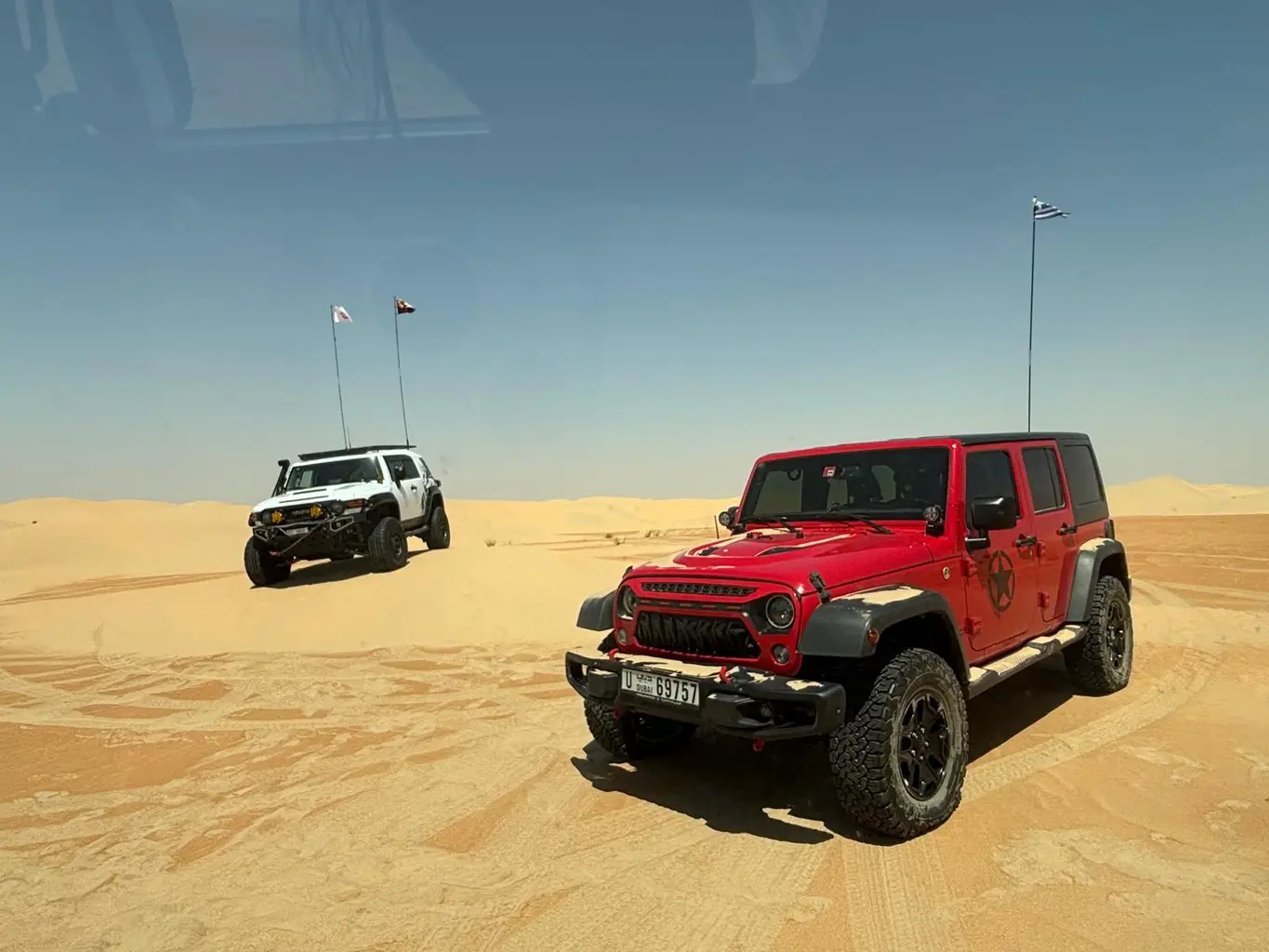
Maintain a safe distance from the vehicle ahead and keep it in sight whenever possible.
Build momentum gradually and maintain smooth, controlled throttle inputs.
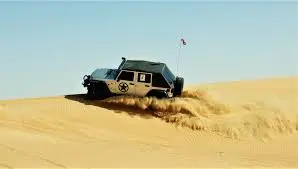
Approach dunes only when you have assessed the slope, crest, landing area and visibility.
Cross dune ridges at a suitable angle and speed as advised by an experienced instructor or marshal.
Slow down before crests and be prepared for unexpected drops, other vehicles or obstacles beyond them.
Follow the established route and the instructions of the lead marshal.
Give yourself space to manoeuvre and always maintain an escape option.
DON’T
Drive blindly over a dune crest or descend a slope you cannot see clearly.
Attempt steep climbs, sharp side slopes or unfamiliar technical manoeuvres beyond your ability.
Make sudden steering, braking or throttle inputs that could destabilise the vehicle.
Follow another vehicle so closely that you cannot react to its sudden stop or recovery.
Race, drift recklessly, jump dunes or perform stunts to impress others.
Assume a dune is safe simply because another vehicle has crossed it.
4. Convoy discipline and marshal instructions
DO
Attend the briefing and understand the route, convoy order, communication procedures and emergency plan.
Follow your designated lead and sweep marshals.
Stop only at designated safe locations or when instructed, and keep the route clear.
Inform a marshal promptly if you notice a vehicle missing, a mechanical problem or an unsafe situation.
Stay with your group and wait for instructions if separated.
Remember: the role of a marshal is not to drive for you, but to help you drive safely.
DON’T
Overtake convoy vehicles without permission.
Leave the designated route, group or checkpoints without informing the marshal.
Ignore radio calls, hand signals, stop instructions or safety warnings.
Invite unauthorised vehicles into a managed convoy or independently change the convoy order.
Assume the vehicle behind you is keeping up. Check that the convoy remains together at designated points.
5. If your vehicle gets stuck
DO
Stop spinning the wheels as soon as you realise the vehicle is bogged down.
Assess the situation, clear sand around the tyres where safe, and use recovery boards if available.
Notify your marshal or recovery team and follow their instructions.
Use only suitable, rated recovery points and compatible recovery equipment.
Keep everyone clear of tensioned straps, ropes, winch lines and the potential path of a moving vehicle.
Secure the scene and ensure all people are in a safe location before recovery begins.
DON’T
Keep accelerating aggressively and dig the vehicle deeper into the sand.
Attach recovery straps to tow balls, suspension parts or unsuitable anchor points.
Stand near a tensioned recovery line or between vehicles during a pull.
Attempt an improvised recovery without understanding the equipment and risks.
Let bystanders approach the recovery area to take photographs.
6. Protect the desert and its wildlife
6
DO
Watch for gazelles, camels, Arabian oryx, reptiles, birds and other wildlife.
Reduce speed and give animals plenty of space to move away naturally.
Remain on authorised or designated routes and respect protected areas and local restrictions.
Take all rubbish, food waste, cigarette ends and other materials back with you.
Camp responsibly and minimise noise, bright lights and unnecessary engine idling.
Report injured wildlife, damaged habitats or environmental hazards to the appropriate authorities or event organisers.
DON’T
Chase, surround, feed, touch or deliberately approach wild animals.
Drive towards wildlife to take photographs or force animals to move.
Drive over vegetation, nesting areas or fragile habitats when avoidable.
Leave rubbish, bury waste, spill vehicle fluids or abandon broken vehicle parts.
Light fires where prohibited or leave a fire unattended.
Create unnecessary noise, disturb other visitors or damage the natural desert environment.
7. Passengers, children and personal safety
DO: Ensure everyone wears a seat belt throughout the drive. Use suitable, correctly installed child restraints and follow the organiser's age and participation rules.
DO: Keep arms, hands and heads inside the vehicle, and remain seated while the vehicle is moving.
DO: Carry water, sun protection and any essential personal supplies.
DON’T: Allow passengers to stand outside the vehicle on dune slopes or near moving vehicles.
DON’T: Leave children unattended in or around vehicles, especially in hot weather.
DON’T: Attempt to exit a vehicle on a steep or unstable slope without first assessing the danger and following the marshal's instructions.
8. When conditions change
DO: Stop in a safe place and reassess if visibility deteriorates, winds intensify, the vehicle develops a fault, or you become uncertain about the terrain. Follow the event leader's decision to slow down, change the route or terminate the drive.
DON’T: Continue into darkness, poor visibility or unfamiliar terrain simply to complete the route. Never let pride, peer pressure or the desire for photographs override sound judgement.
The golden rules of desert driving
Safety over excitement
The objective is to enjoy the desert and return safely.
The convoy stays together
Follow your marshal and never leave others behind.
Never drive beyond your visibility or ability
If you cannot see a safe path, do not commit to it.
Leave nothing behind but tyre tracks
Respect wildlife, protect the environment and preserve the desert for future generations.
Dubai Offroaders philosophy: Off-roading is not about how fast or aggressively you can drive. It is about developing the skills, judgement and discipline to handle your vehicle responsibly while helping everyone in the group enjoy a safe and memorable desert adventure.
These are general safety guidelines, not a substitute for professional instruction, vehicle-manufacturer guidance, local regulations or event-specific marshal instructions.
Official Dubai Offroaders Safety Principle
Remember: Lower tyre pressures to 15–18 PSI before touching sand to expand your longitudinal footprint. Never attach a snatch strap to a tow ball or bumper, and always keep both thumbs on the outside of the steering wheel rim.
#Side Slope Driving#Side Slope Driving Techniques#Off Road Driving Safety#4x4 Driving Techniques#Desert Driving UAE#Off Road Training Dubai#Vehicle Stability#Rollover Prevention#Dune Driving Safety#Off Road Safety Tips#4x4 Training Dubai#Desert Driving Techniques#Terrain Assessment#Safe Dune Driving#Dubai Offroaders
Community Discussion0
Open public discussion. Share your thoughts, ask questions, or connect with certified marshals and fellow drivers.
DO Community Etiquette: Be supportive, share accurate desert knowledge, and uphold safety first.
Posting publicly as a guest visitor. Sign in if you have a Dubai Offroaders account.
Human VerificationBot Protection
Loading security check…

No comments yet — be the first to break the desert silence!