
Key Takeaways & Field SummaryOfficial Marshal Notes
Guided desert driving tours in Dubai drivers can trust, with sand skills, disciplined convoys, recovery support, and routes worth the effort across the UAE.
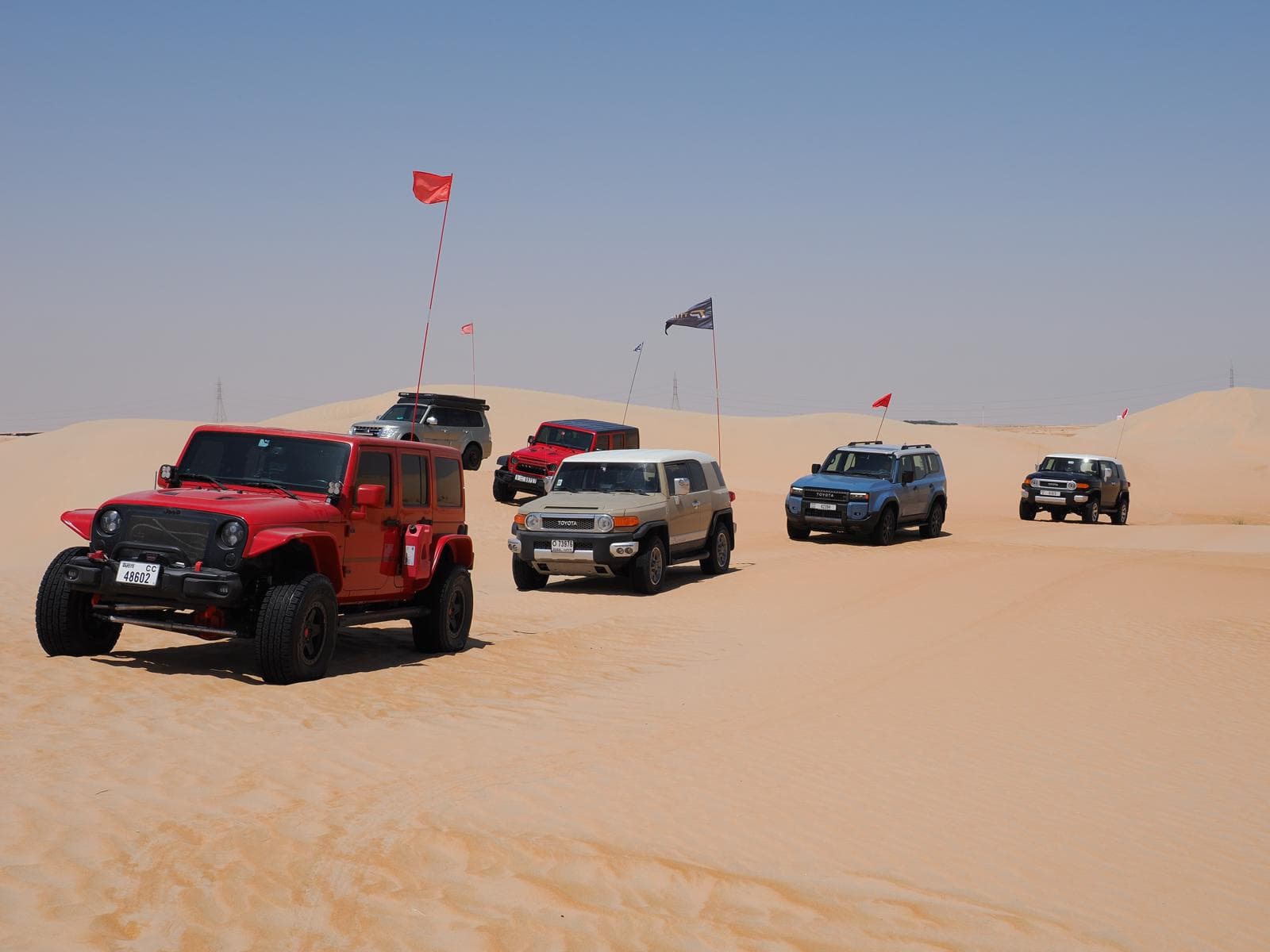
A desert route can look wide open until the first soft crest drops away beneath your hood. That is the moment experience matters. Guided desert driving tours in Dubai are not simply about reaching a scenic camp or collecting dramatic photos. Done properly, they are structured adventures that teach you how to read terrain, manage momentum, support a convoy, and return with more capability than you had when you arrived.
For 4x4 owners, the desert is not a theme park. It is a demanding environment where heat, soft sand, changing visibility, and remote terrain require calm decisions. The right guided drive gives you the space to enjoy the challenge without asking you to gamble on it.
What Guided Desert Driving Tours in Dubai Should Deliver
A well-run desert drive balances progression with control. You should feel challenged, but never abandoned to figure things out alone. The route, pace, convoy size, radio communication, and recovery plan all need to match the stated skill level of the group.
That distinction matters because not every off-road outing is the same. A scenic beginner drive may focus on basic dune approaches, smooth ridge lines, and convoy discipline. An intermediate route can introduce sharper crests, technical bowls, side slopes, and more demanding momentum management. Advanced drives may require precise vehicle placement, fast but measured decision-making, and the ability to self-recover under guidance.
A professional guide does more than lead from the front. They read the surface ahead, watch how drivers respond, adjust the pace when conditions change, and keep the convoy connected. They also create the conditions for learning. A quick radio correction before a crest can prevent a stuck vehicle. A clear briefing on approach angles can turn a nervous first attempt into a controlled one.
The best trips make the standards clear before wheels touch sand: vehicle requirements, required equipment, fuel expectations, meeting time, skill level, and conduct within the convoy. Adventure becomes more enjoyable when nobody has to guess the rules.
The Difference Between a Desert Drive and a Desert Experience
There is a place for passenger dune bashing, especially for visitors who want a short introduction to the desert. But drivers who own a capable 4x4 and want meaningful seat time need something different. They need to understand why a vehicle slides, why tire pressure matters, when momentum helps, and when it creates a bigger problem.
A guided driving experience puts you in the driver’s seat, literally and figuratively. You learn to scan the dune rather than stare at its peak. You begin to recognize wind-blown soft spots, track conditions, exit options, and the line that gives the vehicle the best chance of staying balanced. Those lessons carry from one route to the next.
There is also a community element that cannot be manufactured. A disciplined convoy works because every driver accepts responsibility for the person behind them. You maintain spacing, communicate clearly, stop only when directed, and report an issue early. Mutual support is not an optional extra in remote terrain. It is the system that keeps the group moving safely.
Choose the Right Level, Not the Biggest Challenge
The fastest way to lose confidence is to join a drive beyond your current ability. The safest way to stagnate is to stay on routes that no longer ask anything of you. The right level sits between those two extremes.
If you are new to desert driving, begin with a foundational route or training-led session. Focus on tire deflation, recovery points, radio protocol, basic dune approach, controlled descents, and what to do when the vehicle loses momentum. These skills may not look dramatic from outside the windshield, but they are what make every future drive safer.
Drivers with some sand experience should look for routes that build consistency. Intermediate terrain teaches you to connect dunes, manage transitions, choose lines with intent, and recover without panic when the sand changes. At this stage, repetition is valuable. A good guide will explain not only what to do, but why a specific line works better than another.
Advanced trips are not just faster or taller. They demand greater responsibility. Drivers need the vehicle control, preparation, and self-awareness to operate in more technical terrain without putting the convoy under unnecessary pressure. If a drive requires prior experience, recovery equipment, or approval, treat that as a standard worth meeting rather than a barrier to work around.
Preparation Starts Before the Meeting Point
A desert guide can manage the route, but every driver is responsible for arriving prepared. Start with a mechanically sound 4x4, adequate fuel, properly rated recovery points, a spare tire in usable condition, and the gear required for the drive. Water, a charged phone, sun protection, and appropriate clothing are basic essentials, not afterthoughts.
Your vehicle setup should suit the terrain and the event. Aggressive modifications are not a substitute for judgment, and a stock vehicle is not automatically unsuitable. It depends on ground clearance, tires, recovery points, the route grade, and the driver’s ability. What matters most is an honest match between vehicle, skill, and conditions.
Bring a teachable mindset as well. Experienced drivers still attend briefings. They listen to the marshal, use the designated radio channel, and follow convoy instructions even when they know the area well. Discipline is what makes a group capable of taking on bigger adventures together.
Recovery Support Is Not Permission to Take Risks
Recovery training and capable support are major benefits of organized desert driving, but they should never encourage reckless choices. A stuck vehicle is often part of learning. A preventable rollover, collision, or separation from the convoy is not.
Good recovery begins with assessment. Is the vehicle high-centered, buried to the chassis, or simply lacking traction? Is it safe to attempt a gentle self-recovery? Where are the rated recovery points? What line will allow the vehicle to exit without creating another problem? The recovery process should be calm, deliberate, and led by someone who understands the forces involved.
This is why practical recovery education matters. Using a shovel, traction boards, a kinetic rope, or a winch without correct technique can damage equipment or injure people nearby. On an organized drive, participants learn that the safest recovery is usually the one that takes a few extra minutes to plan.
Respect the Desert and the People in It
Desert access depends on responsible behavior. Stay within the route direction, avoid unnecessary damage to vegetation or sensitive areas, and leave the landscape cleaner than you found it. The desert may appear empty, but it is not without life, history, or consequence.
Respect also applies to the convoy. Do not pressure another driver to attempt terrain outside their ability. Do not overtake without instruction. Do not disappear over a dune because the route looks obvious. Every unnecessary surprise creates work for the people responsible for your safety.
This culture is central to Dubai Offroaders: challenge is earned through preparation, and no capable convoy leaves a participant behind. That standard makes the shared experience stronger, whether the route leads through open dunes, into the mountains, or across borders on a longer expedition.
From One Drive to Real Capability
The strongest reason to join guided desert driving tours is not that someone else knows the route. It is that the right organization helps you become the kind of driver who can contribute to any route.
Over time, you begin to notice the small decisions that separate a smooth desert day from a difficult one. You check your equipment before departure. You look farther ahead. You tell the group when something is wrong. You choose the safer line when conditions deteriorate. You help recover another vehicle without needing to be asked twice.
Start at the level that fits your current skills, listen closely, and treat every drive as practice. The desert will always give you another lesson. The goal is to be ready to learn it.
Remember: Lower tyre pressures to 15–18 PSI before touching sand to expand your longitudinal footprint. Never attach a snatch strap to a tow ball or bumper, and always keep both thumbs on the outside of the steering wheel rim.
Community Discussion0
Open public discussion. Share your thoughts, ask questions, or connect with certified marshals and fellow drivers.


No comments yet — be the first to break the desert silence!