
Key Takeaways & Field SummaryOfficial Marshal Notes
Learn how to read desert dunes with safer line choices, wind clues, crest control, and convoy awareness for confident Gulf off-road driving skills.
A dune can look smooth, welcoming, and completely predictable from the track below. Then, halfway up, the sand softens, the crest sharpens, and the far side drops away more steeply than expected. Learning how to read desert dunes is what turns that moment from a surprise into a deliberate driving decision.
For Gulf off-roaders, dune reading is not about chasing the tallest ridge or copying the vehicle ahead. It is the discipline of observing wind, sand texture, slope angle, exits, and the people around you before momentum commits you to a line. Safety Always Comes First, and in the desert that begins well before the throttle goes down.
How to Read Desert Dunes: Start With the Wind
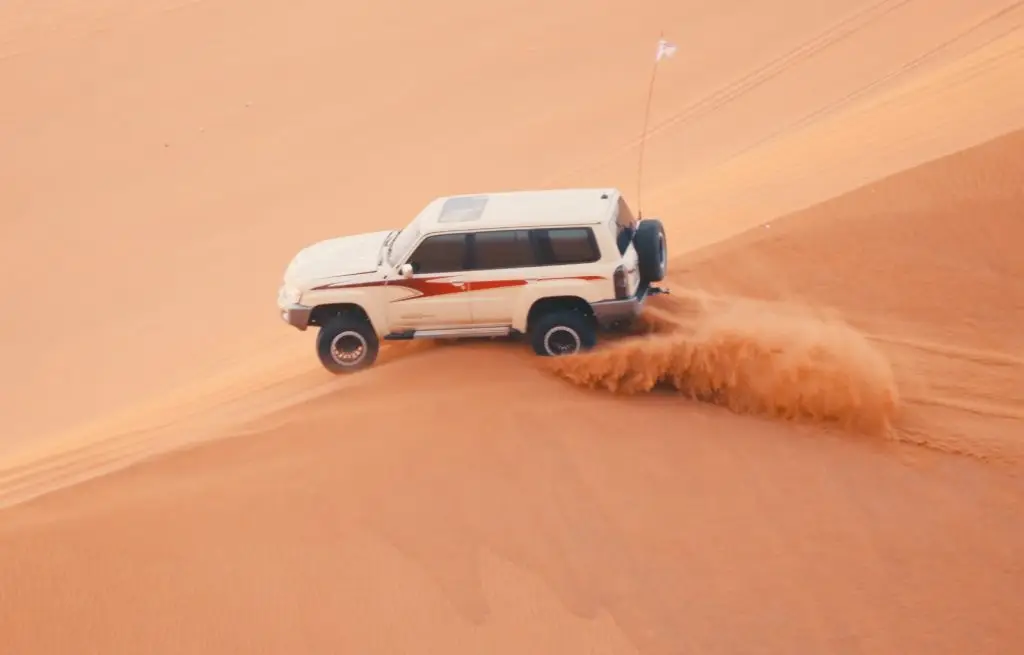
Every dune carries the signature of the wind that built it. The side facing the prevailing wind is usually the windward slope: longer, firmer, and more gradual. The opposite side is the slipface, where sand falls away at a much steeper angle. That difference is the first thing to identify from a distance.
A windward face often offers the safer approach, especially for a newer driver. It gives the vehicle space to build controlled momentum and lets you assess the crest before reaching it. But “usually” matters. Recent wind can soften the surface, erase tracks, and form small ridges that interrupt traction. A long slope can still be difficult if the sand is loose or the approach is badly rutted.
The slipface deserves respect. It may be a clean, steep descent, or it may conceal a bowl, a sharp drop, cross tracks, vegetation, or another convoy stopped out of sight. Never assume the far side matches the side you climbed. At the crest, reduce speed early, look over only when it is safe to do so, and follow the line and instruction set by the convoy lead.
Read the Shape, Not Just the Height
Tall dunes are obvious. Complex dunes are not always tall at all. A low, broken ridge with multiple bowls and soft pockets can demand more judgment than a single high, clean face.
Before approaching, look for the dune’s overall geometry. Is there a continuous ridgeline, or does it split into several peaks? Does the slope run straight to the top, or does it curve toward a side ridge? Is there a visible exit? A good line has a purpose from entry to exit. If you cannot see where the vehicle will go after the crest, you do not yet have enough information to commit.
Pay close attention to cornices: overhanging lips of sand formed near a crest. From below, they can make a dune look rounded and manageable. From the top, they may hide a sudden drop or collapse under the weight of a vehicle. Treat a sharp, wind-carved crest as a warning, not an invitation to carry speed.
Crescent-shaped dunes also require a different read. Their horns often point downwind, and the sand near those outer edges can be less predictable than the central face. The shape may guide your route around an obstacle, but it should never replace a proper assessment of surface condition and runout.
Let Sand Texture Tell You About Traction
Color and texture provide useful clues, although neither is a guarantee. Darker sand can be more compact after moisture or repeated traffic, while pale, freshly deposited sand is often looser. A smooth face with no visible definition may indicate soft, windblown sand. Deep wheel ruts can show a popular route, but they can also trap tires, pull the vehicle off line, and hide uneven ground.
Look for ripples across the slope. Small, closely packed ripples often indicate recent wind activity and potentially loose surface sand. Larger ripples or exposed firmer layers can alter how the vehicle climbs, turns, or descends. In the midday glare, these details are harder to judge, so give yourself more time and distance to observe.
Tracks from the vehicle ahead are information, not instructions. Their driver may have a different vehicle weight, tire pressure, wheelbase, experience level, or intended route. If their track shows repeated digging, a sudden correction, or a stopped vehicle near the crest, ask why before following it. Good convoy driving means learning from the group without surrendering your own observation.
Build a Line Before You Need It
A desert line is more than a path through sand. It is a planned sequence: approach, climb or traverse, crest, descent, and exit. Read all five stages before entering the first one.
On a straight climb, choose a section with enough run-up, a clean surface, and room to retreat safely if momentum fades. Keep the vehicle pointed toward the intended crest. Late steering corrections scrub speed and load the tires sideways, which can quickly turn a clean climb into a stuck recovery.
When traversing a dune, assess the side slope honestly. A line that looks shallow from a distance can feel dramatically steeper once the vehicle is committed. The danger is not simply sliding downward. It is losing forward momentum, encountering a soft patch, or making a sharp uphill correction that unsettles the vehicle. If the angle, surface, or exit is uncertain, there is no shame in choosing a lower route or asking the lead for a safer option.
On descent, prioritize control over speed. Keep the vehicle straight, use appropriate low-range settings where conditions and vehicle setup call for them, and avoid harsh steering or braking inputs. The descent should finish with room to regroup, not with a rushed turn at the bottom.
Read the Dune in Context
No dune exists in isolation. The terrain around it changes the decision. A ridge can lead into a bowl with no easy exit. A seemingly open descent may merge with another convoy route. A narrow corridor between dunes can channel traffic and leave little space for a recovery.
Pause your visual scan beyond the dune itself. Identify vehicles, pedestrians, wildlife, fencing, vegetation, and areas where tracks converge. In the UAE, Oman, and Saudi Arabia, desert terrain can shift quickly from open sand to gravel plains, sabkha, rocky edges, or managed areas. The correct driving technique can change within minutes.
Time of day matters as well. Low sun creates useful shadows that reveal contours, but it can also conceal soft pockets behind a bright ridge. At night, visual depth is reduced and familiar shapes become deceptive. Night driving should follow established procedures, appropriate lighting discipline, and experienced leadership, not guesswork.
Use the Convoy as a Safety System
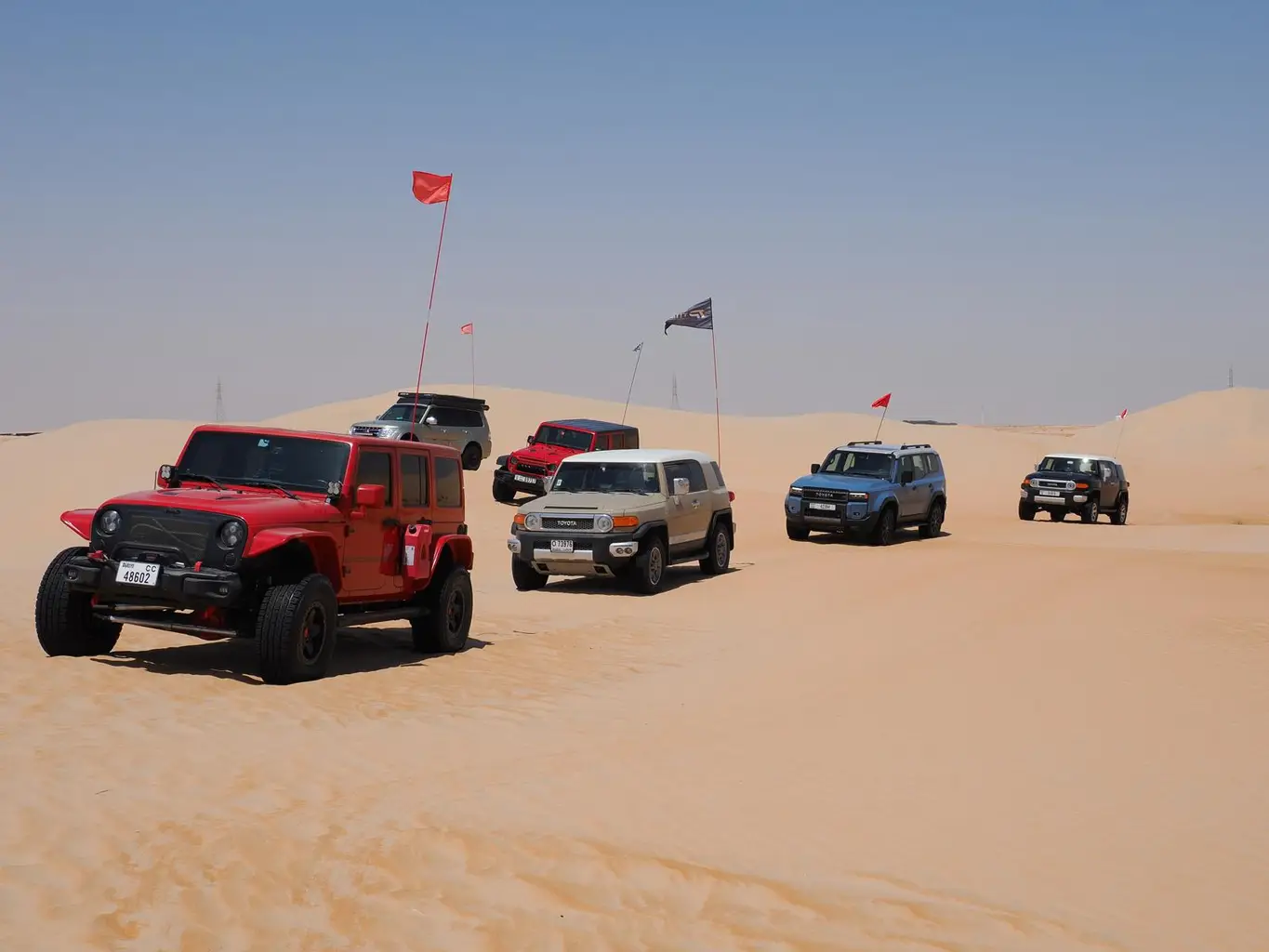
A well-run convoy gives every driver more than company. It creates observation points, communication, recovery capability, and a shared plan. The lead reads the route ahead, the middle of the convoy maintains spacing and relays information, and the sweep ensures nobody is left behind.
That system only works when drivers protect gaps and communicate early. Do not crest a dune until the vehicle ahead has cleared the danger area and the route is confirmed. Do not stop on a blind crest or in the direct line of a climb. If you lose momentum, report it immediately, stop safely, and wait for instruction rather than repeatedly spinning the tires into deeper sand.
Mutual Respect Is Non-Negotiable. That means accepting a reroute without ego, giving a newer driver room to learn, and treating a recovery as a coordinated task rather than a spectacle. The strongest off-road communities are built by drivers who make good decisions when nobody is watching.
Practice the Read Before the Challenge
Dune reading improves through repetition, but only when the progression matches your capability. Start on smaller, open dunes where you can study slope changes, tire marks, and exits at low consequence. Watch how a route looks from below, then compare that impression with what you see from the crest and at the base. That comparison trains judgment faster than simply accumulating miles.
Structured training adds the piece that solo practice cannot reliably provide: experienced feedback. An instructor can explain why one line preserved momentum, why another created unnecessary side load, and when turning back was the better decision. At Dubai Offroaders, that progression is central to responsible desert driving, from first sand-driving fundamentals to advanced convoy leadership and recovery skills.
The desert will never become fully predictable, and that is part of its power. Read the wind, the slope, the sand, the exit, and your convoy. Then choose the line that leaves room for control, learning, and everyone’s safe return.
Remember: Lower tyre pressures to 15–18 PSI before touching sand to expand your longitudinal footprint. Never attach a snatch strap to a tow ball or bumper, and always keep both thumbs on the outside of the steering wheel rim.
Community Discussion0
Open public discussion. Share your thoughts, ask questions, or connect with certified marshals and fellow drivers.

No comments yet — be the first to break the desert silence!