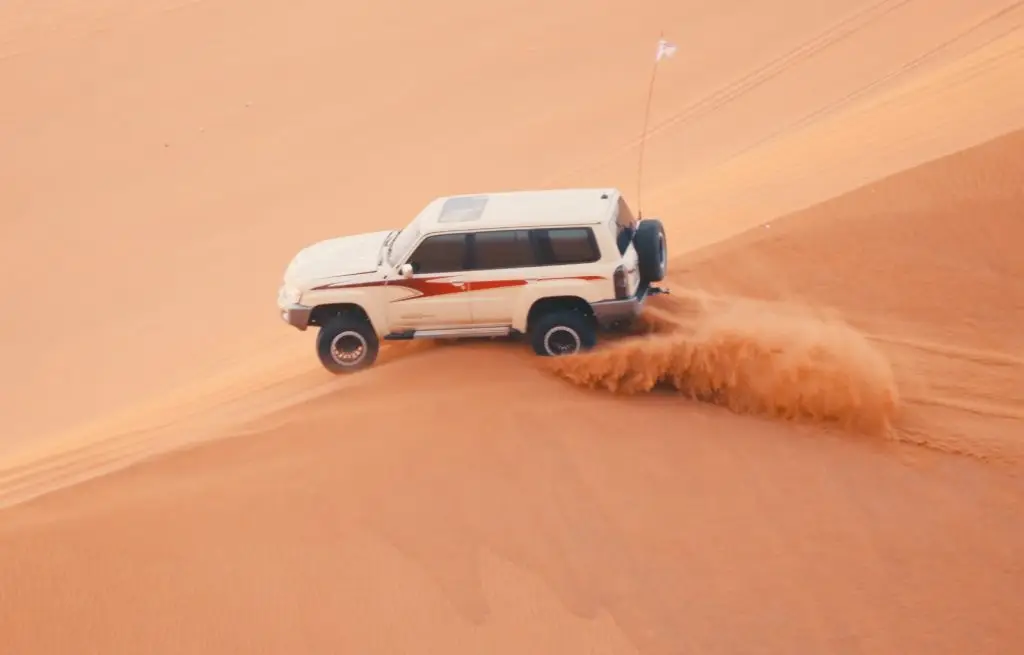
Key Takeaways & Field SummaryOfficial Marshal Notes
Learn side slope driving techniques for desert and mountain terrain, from route choice and vehicle control to recovery decisions that put safety first.
A side slope can look harmless from the driver’s seat: a broad dune face, a gravel shelf above a wadi, a mountain track that simply leans away from you. Then the vehicle shifts its weight downhill, traction changes, and a casual line becomes a serious decision. Side slope driving techniques are not about showing confidence on an angle. They are about reading risk early, keeping the vehicle settled, and knowing when turning around is the strongest call you can make.
In desert and mountain terrain, side slopes demand more judgment than many drivers expect. Sand can collapse beneath the downhill tires. Loose rock can roll under load. A seemingly moderate angle becomes more severe when the vehicle is heavily loaded, fitted with a roof rack, or crossed by ruts. Safety always comes first, and that begins before the wheels enter the slope.
Side Slope Driving Techniques Start Before the Slope
The most effective control input is often the one you never need to make. Stop on level ground where possible and assess the route before committing. Look at the surface, the direction of the fall line, the space available at both ends, and the consequences of a slide. Ask a direct question: if traction disappears, where will the vehicle go?
On a dune, inspect for soft pockets, sharp slip faces, broken crests, and tracks that suggest repeated wheelspin. In the mountains, look for loose shale, off-camber ruts, exposed rocks, drop-offs, and places where the trail narrows. Water-cut channels and dry washes can hide a sudden change in angle. If visibility is limited, a spotter or a walk-up inspection is not hesitation. It is disciplined preparation.
Vehicle setup matters as much as route choice. Use the appropriate four-wheel-drive range for the terrain and vehicle manufacturer guidance. On slow, technical mountain ground, low range may give you the controlled torque and engine braking you need. On a moving sand traverse, the wrong gear can interrupt momentum and increase digging. Select your gear before the slope, because a mid-slope shift can unsettle the vehicle or leave you without drive when it matters.
Tire pressure is also terrain-specific. Lower pressure can increase flotation in soft sand, but it is not a cure for a poor line or an excessive slope. On rocky terrain, pressure choices must balance grip, sidewall protection, and the risk of tire damage. Make adjustments with the terrain, your tire specification, vehicle load, and the guidance of experienced leaders in mind.
Understand What Raises Rollover Risk
No single angle tells the whole story. A vehicle may feel stable on one slope and become vulnerable on a shallower one because the surface is loose, the tires are in ruts, or weight is high and unevenly distributed. Roof tents, recovery gear, water, luggage, and passengers all affect the center of gravity.
Keep heavy items low, centered, and secured. Avoid loading one side of the vehicle more heavily than the other. A side slope is not the place for loose cargo to shift or a passenger to suddenly lean out for a photo. Everyone in the vehicle should be seated, belted, and calm before the approach.
Choose a Smooth, Deliberate Line
When crossing a side slope is genuinely necessary, aim for the smoothest practical line with the least severe angle. Avoid deep ruts that can pull the vehicle downhill, sharp ledges that unload a tire, and soft sand that will not support the downhill wheels. In many cases, traveling slightly higher or lower on the slope may improve the surface, but only if it does not increase exposure or force a dangerous turn.
Keep steering inputs small and progressive. Sudden steering is one of the fastest ways to disturb balance, especially when the vehicle is already leaning. Look where you want the vehicle to travel, not down the slope. Your hands should guide the vehicle with purpose, not fight it with constant correction.
Use gentle, consistent throttle. Too little momentum in soft sand can cause the vehicle to sink and drift downhill. Too much throttle can break traction, throw the rear of the vehicle sideways, or dig the downhill tires into a rut. The goal is controlled forward motion, not speed. If you feel the vehicle beginning to slide, aggressive throttle and panic braking can make the situation worse.
On loose mountain terrain, slow is usually your ally. Maintain enough movement to avoid stopping in an awkward place, but let low-range gearing and careful throttle do the work. On a sand traverse, maintain the measured momentum required to stay on top of the surface. These are different environments, and experienced drivers adapt rather than applying one technique everywhere.
Avoid Braking and Clutch Errors
Heavy braking on a side slope can lock or slow the wheels unevenly, reducing the ability to steer and encouraging the vehicle to slide. Brake smoothly and only when necessary. If descending diagonally, use appropriate gearing and engine braking to control speed rather than relying entirely on the brake pedal.
For manual-transmission vehicles, avoid coasting with the clutch depressed. You lose valuable engine braking and can make the vehicle harder to control. For automatic vehicles, understand how the selected drive mode, hill-descent system, traction control, and transmission behavior work before you need them. Driver aids can help, but they cannot overcome gravity, poor tire contact, or an unsafe route.
If the Vehicle Starts Sliding Downhill
The first rule is simple: do not panic. A slide may be recoverable, but abrupt reactions often turn a manageable drift into a rollover or a stuck recovery.
Ease off the accelerator and avoid sharp braking. Keep the vehicle pointed in the direction of travel as much as terrain allows. Make smooth corrections, not large steering movements. If you have safe space and sufficient traction, a controlled path toward flatter ground may be possible. But this depends entirely on the terrain, the vehicle’s position, and what lies below.
Do not attempt a dramatic uphill turn to save the line unless a qualified leader has assessed the situation and there is adequate room, traction, and a safe exit. Turning uphill on a side slope can place the vehicle broadside at a steeper angle. Turning downhill can create its own loss-of-control risk. There is no universal recovery maneuver that works in every scenario.
If the vehicle stops in an unstable position, keep occupants seated and belted. Do not allow anyone to step out on the downhill side, where a shift in vehicle position can have severe consequences. Communicate clearly with your convoy leader, marshal, or recovery team. A planned recovery using rated equipment, correct attachment points, and a controlled exclusion zone is always preferable to improvised pulling.
Convoy Discipline Makes Side Slopes Safer
Side slopes are not a place for close following, overtaking, or casual experimentation. Maintain enough distance that the driver ahead can stop, reverse, or recover without pressure from the next vehicle. One vehicle should commit at a time when the route is tight, exposed, or technically demanding.
Clear radio communication matters. The lead should identify hazards, the sweep should confirm that the group is moving safely, and drivers should report hesitation or mechanical concerns early. There is no value in pretending to be comfortable with a line that exceeds your experience. Responsible off-road driving is built on honest communication and mutual support.
This is why structured training has value beyond the technical lesson. Under qualified instruction, drivers learn to judge vehicle lean, recognize when a line is deteriorating, communicate with a spotter, and make a retreat without embarrassment. Dubai Offroaders builds these habits progressively because confidence should come from competence, not pressure to keep up.
Know When to Walk Away
The best side slope decision may be to choose another route, wait for better conditions, or turn back. Wind can soften a dune face within hours. Rain can transform a stable mountain trail into loose, slippery ground. A loaded expedition vehicle may not have the same safe margin as a lightly equipped day-drive vehicle.
Walk away when the slope is beyond your experience, when the surface cannot be read, when the exit is unclear, or when the consequence of a slide is unacceptable. That decision protects your passengers, your vehicle, your convoy, and the recovery team that would have to intervene.
A capable driver is not measured by the steepest slope crossed. It is measured by the quality of the decisions made before the slope ever becomes a problem. Build that judgment on training, preparation, and respect for the terrain, and every route will teach you something worth carrying to the next one.
Remember: Lower tyre pressures to 15–18 PSI before touching sand to expand your longitudinal footprint. Never attach a snatch strap to a tow ball or bumper, and always keep both thumbs on the outside of the steering wheel rim.
Community Discussion0
Open public discussion. Share your thoughts, ask questions, or connect with certified marshals and fellow drivers.

No comments yet — be the first to break the desert silence!