
Key Takeaways & Field SummaryOfficial Marshal Notes
Recognizing soft sand terrain helps desert drivers select safer lines, manage momentum, protect vehicles, and support a convoy when conditions shift fast.
A dune can look firm from the ridge and swallow a tire halfway down its face. Recognizing soft sand terrain before you commit is one of the skills that separates controlled desert driving from an avoidable recovery. It is not about fearing every patch of pale sand. It is about reading the surface, understanding how your vehicle will load it, and making an early, disciplined decision.
In the Gulf, conditions can change within a single drive. Wind reshapes a route overnight. Heat dries and loosens a bowl by midday. A heavily traveled track can be compact at the entrance and deeply churned around the next turn. Safety Always Comes First, which means the correct response is never to wait until momentum has disappeared and the chassis is sitting on the sand.
Recognizing Soft Sand Terrain Starts Before the Wheels Enter
Soft sand is not always obvious by color alone. Fresh, light-colored sand can be firm after cool nights, while darker sand that has been repeatedly worked by tires may be loose and deep. The better approach is to read several signals together: the surface texture, the shape of the dune, the tracks ahead, and the way wind has deposited sand.
Look for sand with a dry, powdery appearance rather than a packed, slightly rippled surface. Fine grains often build up where wind slows - at the base of a dune, inside a bowl, behind vegetation, or on the sheltered side of a crest. These areas may look smooth and inviting, but smoothness can mean there is no compacted layer supporting the vehicle.
Tire tracks tell a useful story. Shallow, clean tracks usually suggest firmer ground. Deep ruts, broken edges, or a trail of vehicles that appears to drag through the surface are warnings that the sand is giving way. A single set of tracks is not proof. A lighter vehicle, different tire pressures, or a driver carrying more speed may have passed without trouble. Treat tracks as evidence, not a guarantee.
Read the Dune Shape and Wind Direction
A dune has different personalities on each side. The windward side is often more gradual and may be relatively compacted by the prevailing wind. The leeward side can be steeper, softer, and more unpredictable, especially where loose sand has accumulated below a crest.
Crest approaches deserve special attention. The sand near the top can be soft because drivers lift off too early, spin their tires, or change direction while searching for a view. Never assume the ridge will support a stop or a sharp turn. Approach with the right line, enough controlled momentum, and a clear plan for what lies beyond it.
Bowls are another common trap. Sand naturally gathers at the bottom, and repeated attempts to climb out can turn a manageable slope into deep churn. If the bowl has multiple recovery marks, exposed skid marks, or wide areas of disturbed sand, pause before entering. Ask whether your vehicle has the power, momentum, room, and exit line to leave without creating a problem for the convoy.
The Four Signs That Demand an Early Decision
When terrain changes quickly, experienced drivers do not wait for a dramatic loss of traction. They make small corrections before the vehicle is committed. Watch for these four signs together:
- The front tires begin to push a growing wave of sand rather than rolling cleanly across the surface.
- Engine revs rise while forward progress slows, even though steering input remains light and controlled.
- The vehicle settles lower into the tracks, reducing ground clearance and increasing rolling resistance.
- Steering starts to feel vague or the vehicle drifts away from the intended line as the sand collapses under the tires.
One sign may simply call for a smoother throttle input. Two or more usually mean it is time to reduce the load on the vehicle and reassess. Continuing with more throttle often digs the tires deeper, heats the transmission, and turns a simple reposition into a full recovery.
Match Your Driving to the Surface
Soft sand rewards momentum, but momentum is not speed for its own sake. It is controlled forward energy that carries the vehicle across loose ground without abrupt braking, sharp steering, or wheelspin. The correct pace depends on the vehicle, tire pressure, cargo weight, slope, and route. A loaded overland vehicle needs a different approach than a lightly equipped short-wheelbase 4x4.
Before entering a known soft section, select the appropriate drive mode or low-range setting for your vehicle and follow the manufacturer’s guidance. Lower tire pressure increases the contact patch and can make a major difference, but it must be done within safe limits and matched with a plan to reinflate before returning to pavement. A pressure that works well in one vehicle may be unsuitable for another.
Keep steering inputs measured. Turning aggressively builds resistance at the front tires and can push sand ahead of the vehicle. Choose the smoothest available line, ideally avoiding ruts that have been cut too deep by previous drivers. If you need to climb, build momentum on firm ground rather than accelerating hard after the tires have already entered the softest section.
There is also a point where backing out is the strongest decision. If you lose the line, crest an unfamiliar dune with insufficient visibility, or feel the vehicle bogging down, ease off early. Do not spin the tires. Reverse along your own tracks when it is safe to do so, then stop on firmer ground and reassess with the convoy lead.
Soft Sand Changes the Convoy’s Responsibility
Desert driving is not an individual performance. Your choice of line, pace, and recovery discipline affects every vehicle behind you. On organized drives, maintain proper spacing so the driver ahead can stop, recover, or change direction without creating a chain reaction. Never crowd a vehicle attempting a climb or rush into a bowl because its entry looked easy from a distance.
Clear radio communication matters most when the terrain becomes uncertain. Report soft sections early. If you are unsure whether a route is passable, say so before the next driver commits. The lead and marshal team can assess alternatives, adjust the convoy’s approach, or organize a safe recovery zone. Mutual Respect Is Non-Negotiable, especially when a driver needs help rather than advice from a distance.
Recovery itself should be calm and methodical. First, stop wheelspin. Then assess the vehicle position, slope, surrounding traffic, tow points, and recovery plan. Digging a small amount of sand from in front of the tires or placing traction boards correctly may be enough. A kinetic recovery or winch operation requires trained people, suitable rated equipment, a clear exclusion zone, and firm communication. No recovery is worth rushing.
Build the Skill Before the Remote Route
The fastest way to improve at recognizing soft sand terrain is to learn under supervision, where an instructor can explain what you are seeing before it becomes a problem. Training turns vague advice such as “keep momentum” into practical judgment: when to add throttle, when to lift, where to place the wheels, and when to call for support.
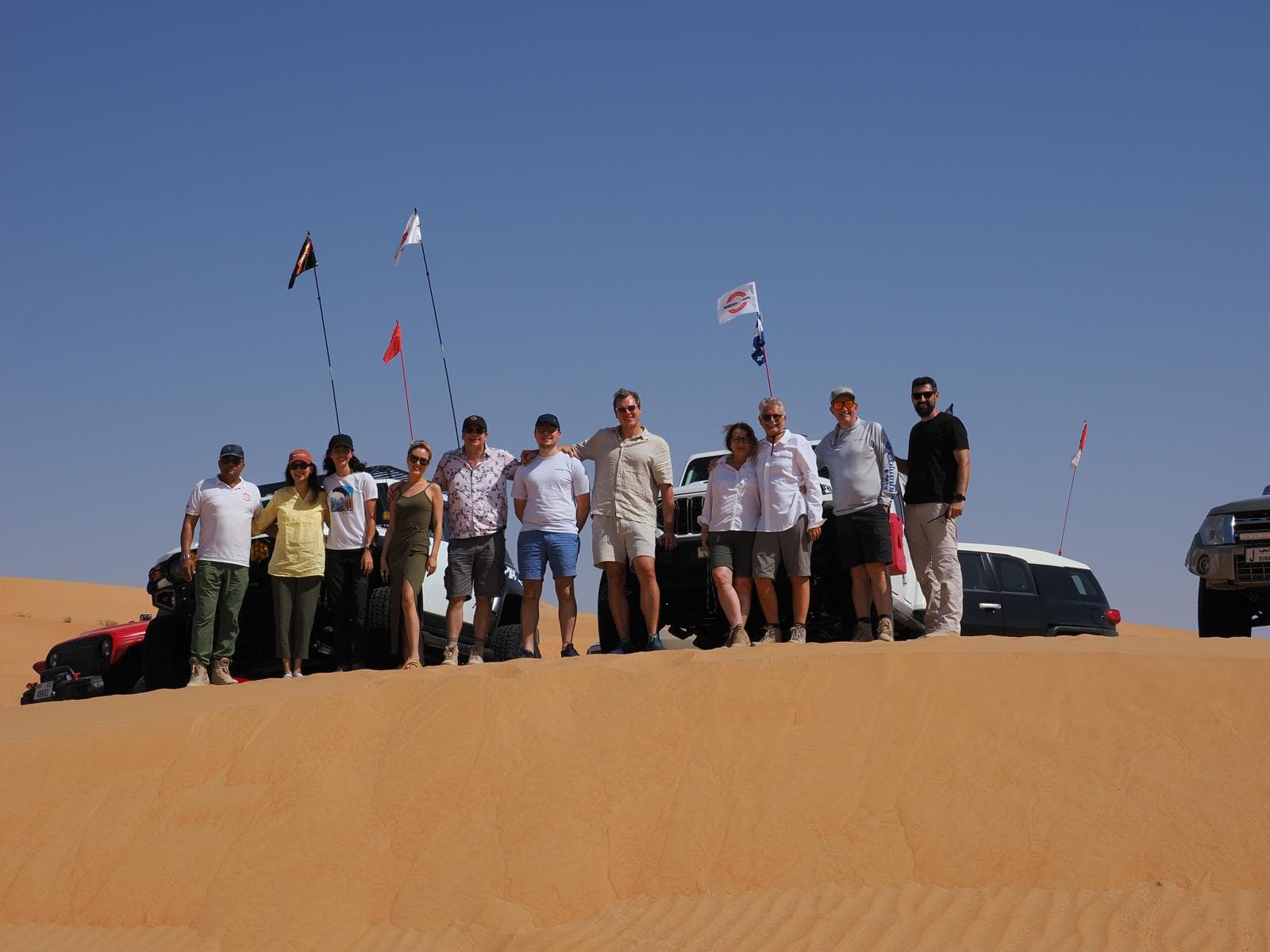
Dubai Offroaders teaches that progression matters. Start with vehicle preparation, basic sand control, convoy discipline, and recovery awareness. Then build toward technical dunes, night driving, route judgment, and leadership responsibilities. Confidence should come from repeatable decisions, not from taking bigger risks on every drive.
The desert rewards drivers who pay attention early. Before the next patch of smooth, pale sand asks more of your vehicle, slow your thinking, read the ground, communicate your plan, and choose the line that keeps both you and the convoy moving forward.
Remember: Lower tyre pressures to 15–18 PSI before touching sand to expand your longitudinal footprint. Never attach a snatch strap to a tow ball or bumper, and always keep both thumbs on the outside of the steering wheel rim.
Community Discussion0
Open public discussion. Share your thoughts, ask questions, or connect with certified marshals and fellow drivers.

No comments yet — be the first to break the desert silence!