Key Takeaways & Field SummaryOfficial Marshal Notes
Wondering what recovery gear is needed for desert driving? Build a disciplined UAE 4x4 kit for safe self-recovery, teamwork, and confident convoy travel.
A vehicle buried to its chassis on a steep slip face does not need panic, wheelspin, or five people pulling in different directions. It needs a calm driver, a trained recovery leader, and the right equipment used correctly. If you are asking what recovery gear is needed for desert driving, start with this principle: recovery gear is a safety system, not a collection of accessories.
The UAE desert can change from firm tracks to soft, wind-blown sand within a few vehicle lengths. Mountain trails add loose rock, ledges, and narrow lines where careless recovery can damage a vehicle or injure someone. Carrying capable equipment matters. Knowing the limits of that equipment matters more.
What recovery gear is needed for a 4x4?
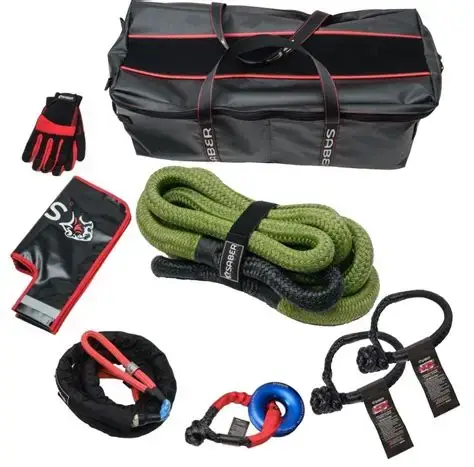
Every off-road vehicle should carry a core recovery kit appropriate to its weight, its recovery points, and the terrain it will drive. For most desert convoy driving, that kit begins with a shovel, tire deflator, accurate tire pressure gauge, air compressor, recovery boards, rated soft shackles, and a rated kinetic recovery rope.
These items cover the majority of common situations: a vehicle that has lost momentum in soft sand, a tire pressure that needs adjusting, or a controlled tow-assisted recovery. They are practical tools, but none is universal. A short, simple extraction may need only a shovel, lower tire pressure, and recovery boards. A deeply stuck vehicle may require a carefully planned kinetic pull by another vehicle with adequate space and traction.
Your kit must match your vehicle. Recovery points should be manufacturer-approved or properly engineered and rated for recovery loads. Decorative hooks, shipping loops, and tie-down points are not recovery points. A tow ball is never a recovery point. Under load, it can detach with catastrophic force.
The core equipment to carry
A quality shovel is often the first and safest recovery tool. Clear sand from in front of the tires, beneath the chassis, and around the differential before asking another vehicle to pull. It takes effort, but it reduces strain on the vehicles and makes a successful recovery far more likely.
A tire deflator and reliable pressure gauge give you control over the contact patch. Lowering pressure appropriately improves flotation in soft sand. The correct pressure depends on the vehicle, tire construction, load, and conditions, so follow the direction of your drive leader or instructor rather than copying another driver’s setting. An air compressor is essential because a recovery is not complete until tires are reinflated for the road journey home.
Recovery boards provide traction without placing a second vehicle in the recovery zone. They are particularly useful when the vehicle is lightly stuck and can move under its own power once sand has been cleared. Position them carefully, keep people clear of the tires, and use gentle throttle. Spinning tires can throw sand, stones, or the boards themselves.
Soft shackles are light, versatile connectors for rated recovery points. They should be clean, undamaged, and correctly sized for the rope and vehicle. A rated kinetic recovery rope, sometimes called a snatch rope, stretches under controlled load and can help recover a stuck vehicle when a static pull will not work. It is not a general towing strap, and it must never be used with unknown attachment points.
Carry protective gloves as well. They help when handling hot, sandy, or abrasive equipment and encourage a deliberate approach during setup. A recovery bag keeps these items protected from UV exposure, sand, and clutter inside the vehicle.
Recovery gear is only as safe as its weakest point
The most expensive rope cannot compensate for an unrated shackle mount. Before every season and before every major trip, inspect your equipment closely. Look for cuts, melted fibers, embedded grit, crushed stitching, corrosion, bent hardware, and labels you can no longer read. Retire suspect gear. Recovery equipment has a hard job, and damaged equipment should not be given a second chance under load.
Load ratings also need common sense. A recovery can generate forces far greater than the vehicle’s curb weight, especially when momentum, suction from soft sand, or an uphill pull is involved. Use gear from reputable manufacturers with clear working load limits and recovery-specific ratings. Avoid mixing random straps, metal hooks, and unknown accessories collected over time.
Metal components deserve additional caution. If metal hardware is required, it must be rated, compatible, and correctly oriented. Keep all unnecessary metal out of a recovery setup. Soft shackles reduce projectile risk, but they still require proper inspection and use.
How to set up a controlled desert recovery
A good recovery begins with an assessment, not a pull. Stop the stuck vehicle from digging deeper. Ask what caused the loss of momentum: excessive speed, insufficient tire pressure, a poor line, or a soft patch hidden behind a crest. Correcting the cause can prevent the same vehicle from becoming stuck again 50 yards later.
Choose the simplest safe option first. Digging and recovery boards often come before a rope. If assisted recovery is needed, select a pull direction that gives both vehicles room, visibility, and stable ground. The recovery vehicle should be aligned as straight as practical with the stuck vehicle. Side loading a recovery point or rope creates unnecessary risk.
Only the people directly involved should remain near the vehicles. Everyone else stands well clear, outside the potential path of any tensioned line. Establish one person as the recovery leader. That person confirms attachment points, gives the driver instructions, controls the count-down, and calls an immediate stop if anything changes.
The vehicles should move smoothly and predictably. A kinetic recovery is not an excuse for a high-speed charge. It is a calculated technique taught through practical training, with a clear plan for vehicle spacing, rope stretch, communication, and safe release of tension. If the first attempt does not work, stop and reassess. Repeating a bad setup with more throttle is how manageable situations become dangerous.
When a winch belongs in the kit
A winch can be valuable for advanced desert travel, mountain terrain, overlanding, and remote expeditions, but it is not mandatory for every first-time off-road driver. It adds weight to the front of the vehicle, requires proper mounting and electrical installation, and demands specific training.
More importantly, a winch needs a credible anchor. In open desert, that anchor may not exist. A second vehicle can sometimes assist, but this requires careful judgment and a recovery plan. On rocky trails, natural anchors and ground conditions may be available, yet line direction and abrasion become bigger concerns.
If you carry a winch, include the supporting equipment: rated recovery points, appropriate soft shackles, a tree protector where relevant, gloves, and winch line protection. Learn how to inspect the line, manage heat, avoid crushing wraps, and control the area around the recovery. Never assume a winch makes a difficult route safe.
Build the kit around your level of training
Beginners often overbuy gear and underinvest in learning. A sensible first kit, proper vehicle preparation, and supervised driving experience will take you further than a cargo area full of untested equipment. Practice using a deflator, compressor, shovel, and recovery boards before you need them in a stressful situation.
As your driving progresses, add equipment based on the routes you actually drive. Desert-focused drivers may prioritize boards, a kinetic rope, and tire management. Overland travelers may add a winch, more comprehensive tools, spare parts, and communications. Mountain drivers may need greater attention to underbody protection, controlled winching, and tire repair.
Dubai Offroaders treats recovery as a shared discipline. The goal is not to prove who can make the biggest pull. The goal is to get every vehicle moving again without injury, unnecessary damage, or pressure on the convoy.
Before your next drive, lay out your gear, inspect it, and make sure every item has a purpose. Then train with experienced people who will correct unsafe habits early. The desert rewards confidence, but it respects preparation even more.
Remember: Lower tyre pressures to 15–18 PSI before touching sand to expand your longitudinal footprint. Never attach a snatch strap to a tow ball or bumper, and always keep both thumbs on the outside of the steering wheel rim.
Community Discussion0
Open public discussion. Share your thoughts, ask questions, or connect with certified marshals and fellow drivers.

No comments yet — be the first to break the desert silence!